
Uncategorized
Essential Features to Look for When Purchasing Medical Examination Lights
Nov
Ever tried shopping for examination lights? It’s a nightmare. You’re clicking through supplier websites, drowning in technical specifications that read like a foreign language. Lux this, CRI that, colour temperature something-or-other. Meanwhile, you just want lights that work in your exam rooms without costing a fortune or forcing you to buy features nobody will ever use.
Poor lighting isn’t some small operational hiccup. It directly impacts whether your clinicians can properly see what they’re examining. I’ve heard from clinic managers who’ve dealt with lights creating shadows right where visibility matters most. Skin conditions appearing totally different under exam lights versus daylight? That happens more often than you’d think, making diagnosis unnecessarily difficult..
Proper hospital examination light equipment? That transforms everything. Your team gets consistent, well-positioned illumination appearing exactly when they need it. We’re cutting through marketing nonsense here to focus on specifications that genuinely matter, explaining why certain features improve what your team can see and accomplish, helping you pick lighting that fits your facility’s actual needs.
Brightness: How Much Light Do You Actually Need?
Clinical examinations need dramatically more light than standard room lighting provides. We’re talking 40,000-65,000 lux measured at one metre distance. That’s your target.
What do those numbers mean in practice? Around 40,000 lux handles routine examinations and wound assessments without problems. Need to do detailed procedures requiring extra visibility? Bump that up to 60,000+ lux. Adjustable intensity becomes crucial here because different tasks demand different light levels throughout your day. Shadow-free coverage? That stops annoying dark patches from falling across patients during critical moments.
Don’t fall for “brighter equals better.” What you need is flexibility. Dial intensity up or down based on what’s happening clinically at any given moment. Simple as that.
Colour Accuracy Changes the Game
Accurate colour perception matters enormously. Think about your daily clinical work, diagnosing skin conditions, evaluating wounds, watching for subtle changes in patient appearance. Colour distortion in any of those situations? That can genuinely lead you astray diagnostically.
Here’s what to pay attention to: colour temperature between 4,500-5,300K delivers neutral white light. Colour Rendering Index needs to hit 90 or higher for accurate tissue colours. You want consistent colour throughout the entire illuminated area, not just the bright centre. Look for minimal colour shift even as LEDs age over years.
Research demonstrates lights with CRI below 90 can alter skin tone appearance enough to interfere with clinical assessments. That’s a risk no facility should take.
Mounting: What Works for Your Space?
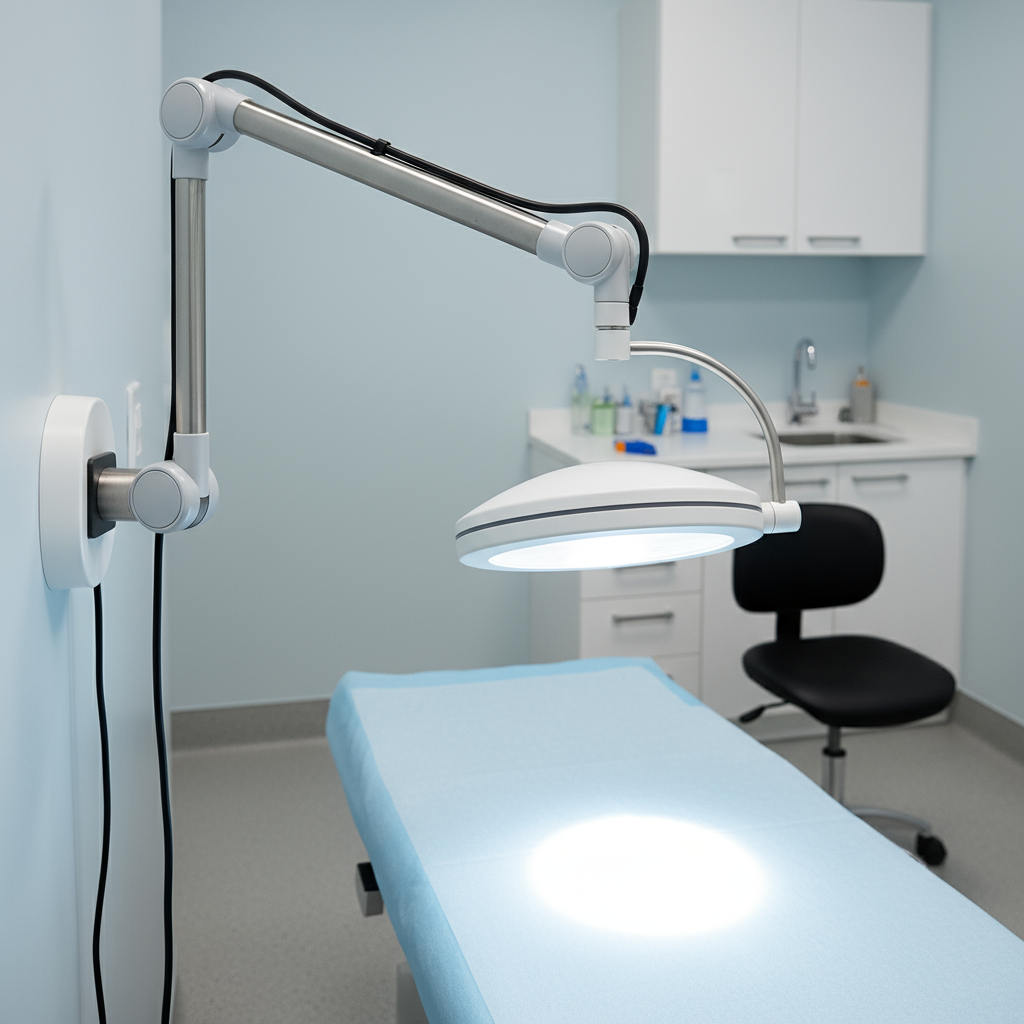
Room layout determines which mounting solution makes sense. What works beautifully in one space might be completely wrong elsewhere. Wall-mounted units? They’re brilliant in consultation rooms where ceiling installation gets messy, kind of like how smart equipment placement boosts efficiency in other areas.
Different situations need different mounting choices. Wall-mounted lights fit smaller spaces and consultation rooms perfectly. Ceiling-mounted systems deliver better adjustability while keeping floors clear. Mobile examination lights provide flexibility across multi-use spaces. Pendant-mounted options work brilliantly in procedure rooms where overhead positioning matters.
LEDs Beat Everything Else
Modern LED examination lights outperform old halogen systems on every measure. You get consistent light output minus the heat that makes patients miserable, and proper maintenance ensures everything functions smoothly.
Why LEDs win: 50,000+ hours lifespan translates to 15-25 years under normal use. They run cool, keeping patients comfortable even during lengthy procedures. Brightness appears instantly, no waiting for bulbs to warm up. Energy consumption drops roughly 80% compared to halogen alternatives.
Calculate total costs over a decade including electricity and replacement bulbs. LEDs almost always cost less overall despite higher upfront prices. It’s one of those situations where spending more initially saves money long-term. Plus, your staff faces fewer headaches dealing with bulb replacements.
Ready to Upgrade Your Examination Lighting?
Quality Medical Examination Lights Available
Contact Sumac Medical Supplies Today
FAQs
- What lux intensity is required for medical examinations?
A. You’ll want 40,000-65,000 lux at one metre for adequate visibility during clinical work. - Why does colour rendering index matter for examination lights?
A. CRI of 90+ ensures accurate tissue colour perception, which matters enormously when diagnosing skin issues and wounds. - What mounting option works best for small examination rooms?
A. Wall-mounted or ceiling-mounted units maximize floor space while delivering the adjustability and coverage you need.
