
Medical waste disposal
The Bin in the Corner Is Doing More Than You Think
Feb
There’s always one.
Tucked into the corner. Lie down. Label facing out. Never the star of the room.
Most people don’t give it a second glance. Fair enough. It’s just a bin, right?
Except it isn’t.
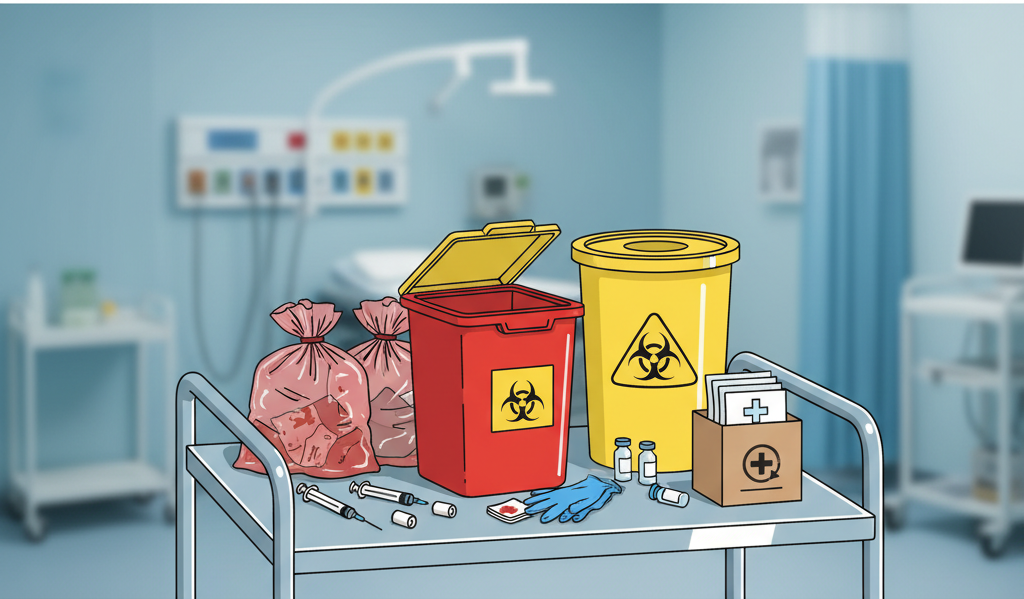
That bin, and everything that ends up inside it, is quietly doing a job most people never think about. Holding risk. Containing it. Making sure it doesn’t spill back into the room.
A used needle. A soaked dressing. A swab that’s done its duty. Once those leave a clinician’s hand, timing matters. Handling matters. Getting it wrong matters. Immediately.
That’s the moment medical waste disposal supplies stop being “supplies” and start being safeguards.
It Starts Where Care Happens
Waste management doesn’t begin in a back corridor or loading bay. It starts right there, besides the patient.
The second something becomes waste, it needs to go where it belongs. No waiting. No shortcuts.
Infectious materials don’t mingle with general rubbish. Sharps don’t sit on trays for later. Cytotoxic waste doesn’t get guessed at. It gets its own clearly marked route out.
Within clinical waste management in Australia, segregation at the point of use is the first real line of defence. Get that right, and the rest tends to follow. Rush it, and problems creep in quietly.
Healthcare has enough pressure already. Extra risk doesn’t help anyone.
About Those Needles
They’re small. Easy to underestimate.
But everyone in healthcare knows what a needlestick injury can mean. That’s not theory. That’s lived experience.
Sharps containers exist because hoping for the best isn’t a strategy. They’re built tough for a reason. Puncture-resistant walls. Secure locking lids. Fill lines that say, stop here.
Quality medical waste disposal supplies include sharps containers that meet Australian standards and protect everyone who comes into contact with them, not just the person using the needle.
If no one ever mentions the sharps container, that’s a good sign. It means it’s doing exactly what it should.
A Bag Is Doing More Work Than You Think
It looks like plastic. It isn’t “just” plastic.
Clinical waste bags carry responsibility. They need to hold weight. Resist tearing. Stay intact during handling, storage, and transport. Autoclave bags must survive high heat. Cytotoxic bags must remain identifiable from start to finish.
In clinical waste management in Australia, the integrity of that barrier is everything. One split seam and the risk jumps instantly.
There’s no clever workaround here. The bag either holds or it doesn’t.
The Ordinary Stuff Still Matters
Not all waste is dramatic. But all of it still counts.
Bin liners in waiting rooms. Sanitary liners in shared facilities. Patient clothing bags in aged care settings. When these fail, someone has to handle waste again. Extra contact. Extra exposure. Extra time lost.
Reliable medical waste disposal supplies bring consistency across the whole site, not just the treatment rooms.
It’s not about perfection. It’s about removing weak points before they become problems.
Compliance Is Ongoing, Not Occasional
Regulations don’t switch off once accreditation is done.
Facilities operating under the clinical waste management Australia requirements are expected to show, consistently, that systems actually work in practice. Not just on paper.
That usually means:
- Clear segregation where waste is created
• Approved containers and bags
• Labelling that’s obvious, not ambiguous
• Secure storage before collection
• Authorised disposal pathways
Policies help. Training helps. But without the right products in use every day, the system unravels.
Processes protect people. Products keep processes honest.
When Supply Is Steady, Care Gets Easier
Running low on sharps containers mid-week creates tension. Finding out a delivery is late forces workarounds. Workarounds introduce risk. It’s a familiar pattern.
Steady access to compliant medical waste disposal supplies takes that stress off the table.
Sumac Medical Supplies supports healthcare facilities across Australia with dependable waste handling products and nationwide delivery. Clinics, hospitals, and aged care providers can plan ahead instead of scrambling.
Waste doesn’t slow down. Supply shouldn’t either.
The Safety: No One Claps For
Patients don’t ask about waste systems. They don’t need to.
But every locked sharps container, every intact clinical waste bag, every correctly separated waste stream quietly protects them anyway.
It protects staff, too. And cleaners. And transport teams. And the wider community.
Waste management isn’t flashy. It’s methodical. It’s disciplined. And over time, that discipline builds trust.
Explore the waste disposal range and make sure your facility is backed by products that perform reliably, meet Australian standards, and support safe clinical practice day in, day out.
Frequently Asked Questions
What are medical waste disposal supplies used for?
They’re used to safely contain and separate clinical waste such as sharps, infectious materials, and hazardous items before authorised disposal.
Why is clinical waste management important in Australia?
Strict regulations exist to prevent the spread, workplace injury, and environmental harm.
What makes a sharps container compliant?
It must be puncture-resistant, securely lockable, and manufactured to Australian containment standards.
Are autoclave bags different from standard clinical waste bags?
Yes. Autoclave bags are designed to withstand sterilisation temperatures without weakening or splitting.
Do cytotoxic materials need separate disposal?
They do. Cytotoxic waste follows a specific disposal pathway using clearly identified containment.
Does Sumac Medical Supplies deliver nationwide?
Yes. Waste disposal products are supplied across Australia to facilities of all sizes.
