
Uncategorized
Dry, Cracked Hands from Sanitizer? How Healthcare Workers Can Protect Their Skin
Oct
Why frequent sanitizer use dries and irritates skin, what to look for in gentler products, and simple routines that keep hands comfortable through long shifts
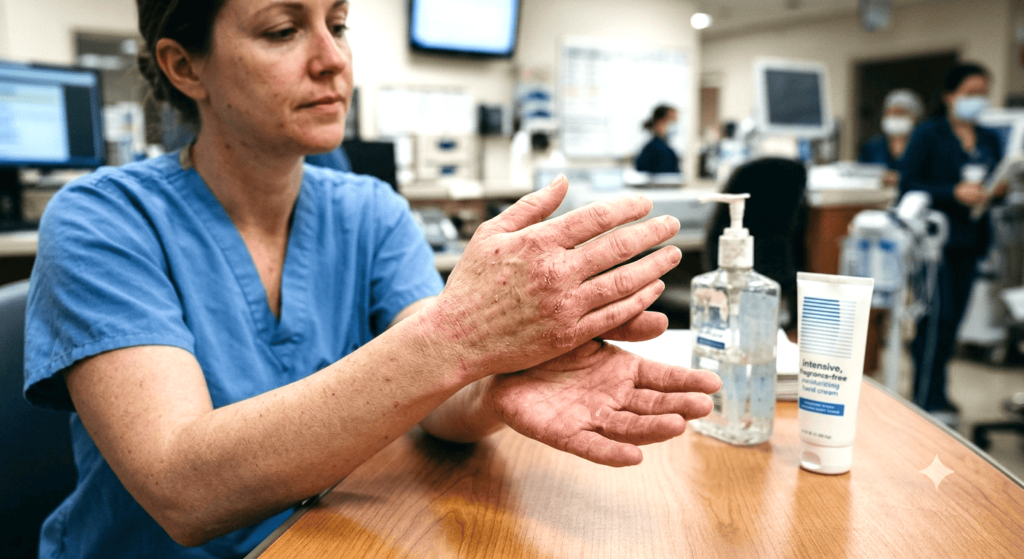
Working at healthcare, where your hands probably take a beating. Sanitizer at every patient contact, washing between tasks, gloves on and off all day. By the end of a shift, many people notice tight, dry skin, red patches, or painful cracks around the knuckles and fingertips.
You are not imagining it, and you are not alone. Dry, irritated hands are one of the most common complaints among healthcare workers. The good news is that most cases can be prevented or improved with a few small changes.
Why Frequent Use Dries Skin
Hand hygiene is essential, so the goal is never to use less sanitizer when it is needed. The goal is to look after your skin while you do it.
What happens to your skin
The outer layer of your skin acts like a barrier. It is made of cells held together by natural oils and lipids, which keep moisture in and irritants out. Alcohol-based sanitizer works by dissolving the lipids on germs, but it can also strip some of the natural oils from your skin. Repeated use throughout the day means your skin has little time to recover.
When the barrier weakens:
- Moisture escapes more easily, leaving skin tight and dry
- Skin becomes more sensitive to soaps, sanitizer, and glove materials
- Tiny cracks can form, which sting when you apply sanitizer
- Irritation can build into redness, itching, and flaking
Moisturisers and Emollients in Formulations
Not all sanitizers affect skin in the same way. Many include added ingredients designed to soften the effect.
Common skin-conditioning ingredients
- Glycerin: Draws moisture into the skin and helps it hold water
- Emollients and skin conditioners: Soften and smooth the skin surface
- Aloe vera: Often added for a soothing feel
- Vitamin E and similar ingredients: Included in some formulations as skin conditioners
A moisturising sanitizer used twenty times a day can still leave hands dry.
Alcohol content still matters
For healthcare use, sanitizer needs to be effective against germs, and that depends on the formulation. Do not switch to a lower-alcohol or alcohol-free product just because it feels gentler without checking that it is suitable for your setting. Ask your infection control team what products your facility approves.
Liquid, gel, or foam
Different formats can feel different on the skin. Some people find liquids and foams dry faster and feel less sticky, while others prefer gels. When choosing a Liquid Hand Sanitizer for healthcare settings, consider the formulation, skin comfort, dispenser compatibility, and your facility’s infection control requirements. A suitable Medical Hand Sanitizer should meet the hygiene requirements of your setting while being comfortable for frequent use. Trialling approved options with your team can help you find the right fit.
Check the label
Look for:
- A clear list of ingredients
- Information on alcohol concentration
- Whether it is fragrance-free, if scents bother you
- Registration or listing details appropriate to your country
Hand Cream Routines
The most effective step for most people is a consistent moisturising routine. Think of it as part of your uniform, not an optional extra.
During your shift
- Use a hand cream or lotion regularly, such as at breaks, after washing, and when you finish tasks that dry your hands out
- Let sanitizer dry completely before putting gloves on, because damp skin under gloves can become irritated
- Dry your hands thoroughly after washing, by patting with a soft paper towel rather than rubbing
- Use lukewarm water instead of hot, which strips more oil
- Wash only when you need to. Use sanitizer when hands are not visibly dirty, and soap and water when they are, according to your facility’s policy
At the end of the day
- Apply a richer cream or ointment before bed
- For very dry hands, try a thick layer and cotton gloves overnight
- Pay attention to the knuckles, fingertips, and the skin between the fingers
Choosing a hand cream
- Fragrance-free options are often better tolerated
- Thicker creams and ointments tend to protect better than thin lotions
- Pump or tube packs are more hygienic than open tubs in shared areas
- Personal supplies are better than shared tubs, to avoid spreading germs
Check with your infection control team about what products are allowed in clinical areas, since some creams can affect glove materials or are not suitable for use at the point of care.
Final lines,
Dry, cracked hands are a common part of healthcare work, but they are not something you have to put up with. Understanding why sanitizer and frequent washing affect your skin, building a simple moisturising routine, choosing gentler products, and getting help when symptoms persist can keep your hands comfortable and your hygiene on track.
If you are choosing hand sanitizer and skin-care supplies for your practice or facility, work with a supplier who can explain ingredients, provide documentation, and offer samples for your team to try. Visit sumacms.com.au to discuss liquid hand sanitizer options suited to your setting, and request a quote or sample.
