
Kitchen Consumables
The Quiet Shift Inside Commercial Kitchens: Why Hygiene Materials Are Getting Smarter
May
Walk into any serious kitchen today and you’ll notice something different.
Not the equipment. That hasn’t changed much.
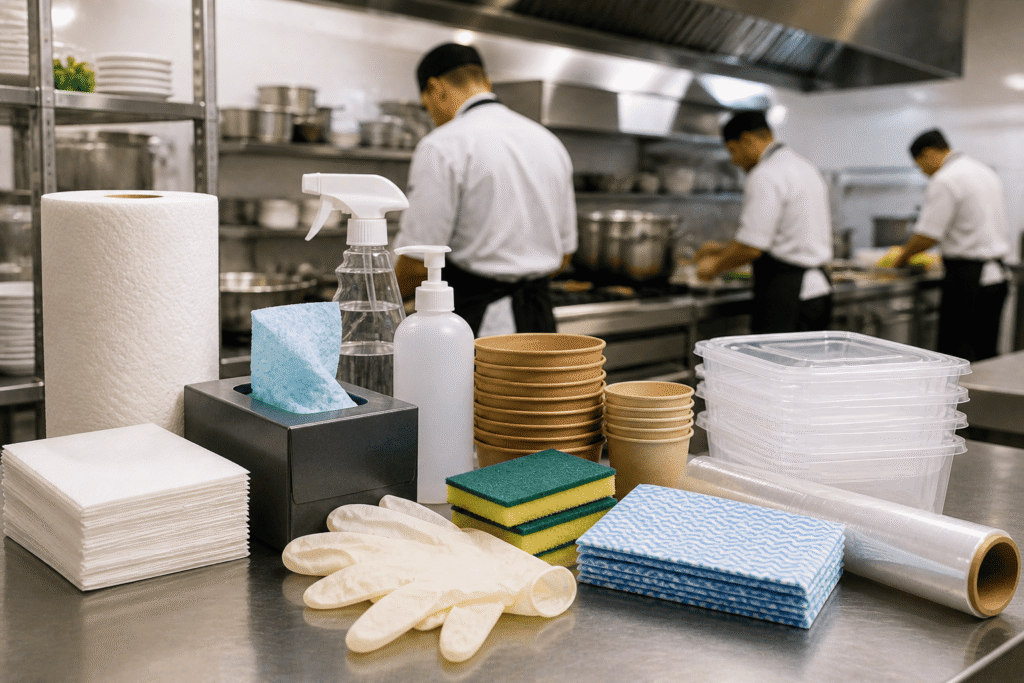
It’s the smaller things. Gloves, wraps, and wipes. packaging.
The stuff most people ignore is now doing heavy lifting.
That shift didn’t happen for style. It came from pressure. Higher safety expectations, stricter audits, and zero tolerance for mistakes, especially across Australia, where compliance isn’t optional.
And that’s exactly where commercial kitchen consumables have started to evolve.
Why Basic Supplies Are No Longer “Basic”
For years, consumables were treated like background items. Buy in bulk, keep costs low, move on.
That mindset doesn’t hold anymore.
Kitchens today run tighter. Faster. Under more scrutiny.
A single lapse in hygiene can shut things down, damage reputation, or worse.
That’s why healthcare kitchen supplies are influencing how even standard commercial kitchens operate now.
Because hospitals don’t gamble on hygiene. And that standard is quietly becoming the benchmark.
The Real Problem: Contamination Doesn’t Announce Itself
Here’s the thing most teams underestimate.
Contamination rarely looks obvious.
It’s not dramatic. It’s subtle. A missed glove change. A reused cloth. A surface was wiped but not sanitised properly.
And once it spreads, it’s already too late.
That’s where better consumables step in.
Not to fix mistakes after they happen, but to reduce the chances of them happening in the first place.
What Makes “Antimicrobial” Different in Practice
You’ll hear the term everywhere now. But in a working kitchen, it’s not about marketing.
It’s about control.
Antimicrobial materials are designed to slow down or limit bacterial growth on surfaces that are used repeatedly during service.
Think wipes that don’t just clean but reduce microbial transfer. Gloves that maintain barrier integrity longer. Packaging that protects food beyond just covering it.
Used properly, they don’t replace hygiene protocols.
They reinforce them.
Where It Actually Changes Day-to-Day Operations
This is where things get practical.
During prep, better wraps and gloves reduce direct handling risks.
During service, wipes allow fast cleaning without breaking workflow.
During storage, proper packaging prevents exposure and maintains quality.
It’s not about adding steps.
It’s about removing friction while keeping standards high.
That’s why more kitchens, especially those tied to healthcare or institutional setups, are rethinking how they source commercial kitchen consumables.
Cost vs Risk: The Conversation Most Teams Avoid
Let’s be direct.
Higher-grade consumables cost more upfront.
But the real cost sits elsewhere.
Failed inspections. Wasted stock. Customer complaints. Staff time lost fixing avoidable issues.
When you look at it that way, better materials don’t increase cost.
They reduce risk.
And risk is always more expensive than supply.
Why Supply Quality Matters More Than Product Variety
Most kitchens don’t fail because they chose the wrong product.
They fail because supply isn’t consistent.
Different batches. Different quality. Delays when it matters most.
That’s why working with a supplier like Sumac Medical Supplies changes the equation.
The focus isn’t just availability.
It’s consistency. Standards. Reliability under pressure.
Especially in environments where healthcare kitchen supplies are expected to perform without compromise.
What Smart Kitchens Are Doing Differently Now
They’re not overcomplicating things.
They’re tightening control.
Fewer variables. Better materials. Clear processes.
They treat consumables as part of the system, not just something to restock.
Because once you see how much impact these small items have on hygiene, workflow, and compliance, it’s hard to go back to treating them like an afterthought.
