Medical Disposables and Consumables
Are Medical Face Masks Entering a New Era Beyond Infection Control?
Aug
For most of us, a mask meant one thing: a barrier against germs. You put it on when someone was sick, or when you were the one who might be. That’s changed. Now it sits inside a much bigger conversation, one that includes workplace safety, how confident patients feel walking into a clinic, and whether a business is ready for the next health scare, whatever that turns out to be.
Hospitals, aged care homes, dental clinics, laboratories, and even office workplaces are adopting a more strategic approach to PPE, recognising its role in everyday health, safety, and infection control. Stocking up only when there’s an outbreak isn’t really how it works anymore. Most are building it into ongoing operations: comfort, compliance, safety, being ready before you need to be. Medical face masks have quietly taken on a much bigger job than anyone would have guessed a few years back.
Key Takeaways
- Medical face masks are treated as everyday safety equipment now, not something reserved for emergencies.
- Buyers care about comfort and breathability almost as much as protection itself.
- Disposable masks, respirators, face shields and eye protection each solve a different problem; they’re not interchangeable.
- A lot of facilities are keeping more PPE on the shelf than they used to, just in case.
- The supplier relationship matters, because quality and stock reliability aren’t guaranteed.
Why Are Medical Face Masks Being Viewed Differently Today?
It used to be simple. Masks went on during outbreaks and came off when the risk passed. That’s not really the mindset anymore. Providers and businesses now fold masks into how they think about occupational health and everyday risk, not just infection control during a crisis.
Say what you want about the pandemic, but it reset expectations around respiratory protection for good.
A lot of organisations now treat PPE planning as part of normal workplace safety rather than something you dust off when there’s a scare. Infection prevention hasn’t stopped being the point, but there’s more in the mix now: how long people wear the thing, whether they can still talk to a patient properly with it on, whether it’s sustainable, whether the supply chain will hold.
The World Health Organisation still backs proper mask use as a core part of infection prevention wherever there’s respiratory risk in a healthcare setting. And plenty of facilities have tightened up their long-term PPE policies since 2020, mostly so they’re not caught flat-footed again.
We’ve noticed this ourselves working alongside procurement teams. Places that used to order masks reactively, only when the cupboard was nearly bare, now run a proper year-round PPE inventory instead.
How Has PPE Changed Beyond Infection Prevention?
PPE programs now cover a lot more ground than they used to. It’s not just “does this stop infection” anymore; it’s comfort, compliance, and whether it holds up through a full shift.
Staff in these roles are often wearing masks for hours at a time, so the quality of the product stops being a minor detail.
What buyers check for these days:
- Can you breathe comfortably in it for eight hours
- Does it fit the face properly
- Is it comfortable against skin over time
- Does the filtration hold up consistently
- Is the manufacturing reliable batch to batch
- Can staff still communicate clearly while wearing it
The conversation isn’t “do we need masks” anymore. It’s “which one makes sense for this job.”
Why Are Disposable Face Masks Still an Essential Choice?
Disposable face masks haven’t lost their place. For a lot of everyday healthcare and workplace situations, they’re still the obvious answer: cheap, quick to swap out, hygienic without much thought required.
They’re still one of the most commonly used PPE items in the country.
You’ll find them in:
- General medical consultations
- Dental work
- Any patient-facing healthcare role
- Aged care
- Community health services
- Workplace first aid kits
- Front-of-house visitor protection
Using a new one each time avoids the mess that comes with a reused, possibly damaged mask, and keeps infection control meaning something.
Where Do Respirators and Face Shields Fit Into Modern PPE?
Sometimes a regular mask just isn’t enough. That’s where respirators and face shields come in, and which one you reach for depends on the exposure level, the procedure, and what the workplace demands.
Not every task calls for the same level of gear.
A layered setup often looks something like this:
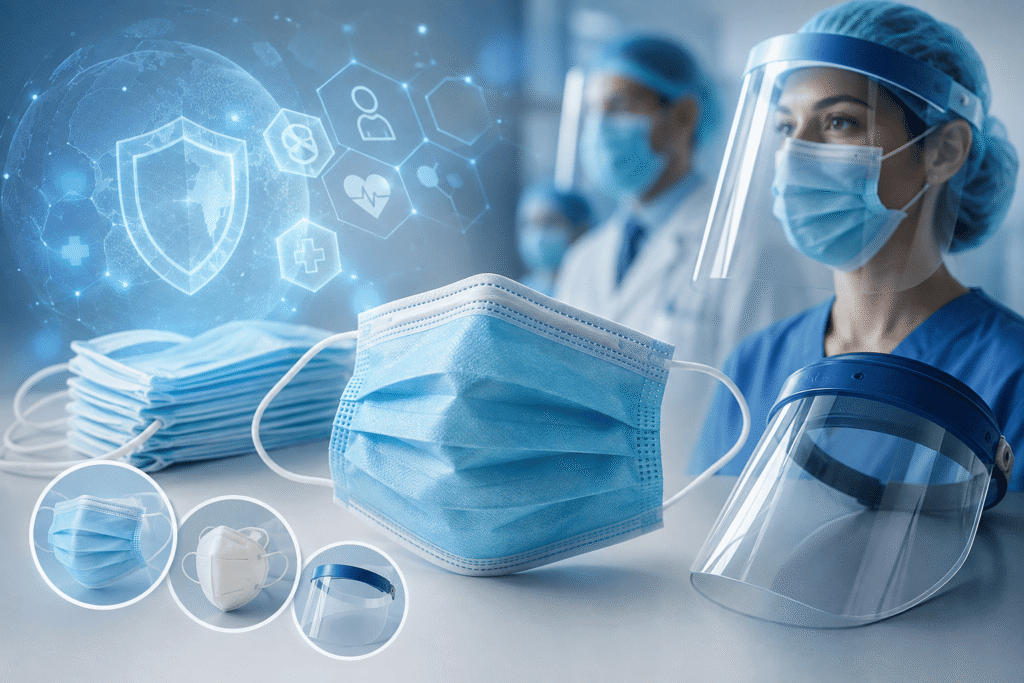
Medical masks
Fine for routine patient care and general clinical work.
Respirators
Sometimes called a face shield respirator or a respirator system. These get pulled out in higher-risk environments where airborne particles are more of a concern.
Eye and face protection
A surgical face shield keeps splashes and droplets off the eyes and face. It’s meant to sit alongside respiratory protection, not stand in for it.
Combining the right pieces cuts down risk that a single item on its own can’t manage, and it keeps things within workplace safety policy.
What Are Healthcare Providers Looking for in PPE Today?
Providers want protection that holds up without wearing staff down or slowing them up. And honestly, reliable supply has become just as important as the product itself.
Procurement teams have stopped shopping on price alone.
What tends to matter now:
- Whether the product is properly certified
- Whether the stock is there when it’s needed
- Having options rather than one-size-fits-all
- Comfort over a long shift
- How fast an order arrives
- Consistency from batch to batch
- A supplier they can trust
Across the industry, a lot of facilities are sitting on bigger PPE reserves than they were pre-2020, so a sudden spike in demand doesn’t catch them out again.
Why More Organisations Choose to Buy PPE Online
Buying online has made this whole process a lot less painful. Advances in digital procurement have made it far easier to compare products, automate recurring orders, and purchase from multiple suppliers through a more streamlined process.
More providers now go looking for PPE masks online simply because it makes inventory planning simpler and cuts down on the admin nobody wants to do.
Organisations after a dependable face mask supplier online can compare specs and quantities before committing to a bulk order, rather than guessing.
It’s especially handy for anyone managing stock across more than one site.
Choosing the Right Face Protection for Different Work Environments
Different workplaces call for different levels of protection. Matching the right gear to the actual environment is what keeps things safe and efficient, not buying the same box of masks for every situation.
| Workplace | Recommended PPE Focus |
| Medical clinics | Medical masks, surgical masks |
| Dental practices | Medical masks, face shields, respirators where required |
| Hospitals | Medical masks, respirators, eye protection |
| Aged care | Disposable masks and protective face shields |
| Laboratories | Respirators and additional face protection |
| Workplace first aid | Disposable masks and emergency PPE supplies |
Good PPE strategy starts with understanding the actual risk in front of you, not defaulting to whatever’s already in the cupboard.
The Bottom Line
Masks aren’t the same story they were a few years ago. Infection prevention is still why they exist, but providers and workplaces expect more from them now: comfort through a long shift, dependable protection, supply that doesn’t dry up, and staying compliant without it being a hassle.
Instead of treating PPE as a stopgap, more organisations are just investing in it properly, so it holds up day to day and doesn’t fall apart the moment something unexpected happens. Getting medical face masks, respirators and face protection right makes a difference for the people wearing them and the people around them.
Trusted PPE Solutions from Sumac Medical Supplies
At Sumac Medical Supplies, we supply PPE to healthcare providers, aged care homes, dental practices, labs, workplaces and first aid teams right across Australia. From medical face masks and disposable face masks through to respirators, face shields and other protective gear, everything on our shelves is there to help teams keep their safety standards where they should be. Have a look through our full range of face masks, respirators and protective equipment.
Frequently Asked Questions
1. What are medical face masks primarily used for?
They cut down the spread of respiratory droplets and protect anyone in a clinical or workplace setting where there’s exposure risk, staff, patients, visitors, the lot.
2. Are disposable face masks suitable for everyday healthcare use?
Yes. They turn up in routine patient care, consultations, aged care, dental work and plenty of workplace settings because they’re hygienic, single-use, and don’t require much thought.
3. When should a surgical face shield be used?
Any time there’s a chance of splashes, sprays or droplets reaching the face or eyes. It’s usually worn on top of proper respiratory protection, not instead of it.
4. What is the difference between a medical mask and a face shield respirator?
A medical mask mostly deals with respiratory droplets. A respirator offers a higher level of filtration for situations with more airborne risk. Either way, it should come down to an actual risk assessment, not a guess.
5. Why do organisations choose a face mask supplier online?
Because it means a wider product range, easier comparisons, better control over inventory, and less time spent chasing orders around.
6. Is buying PPE masks online a reliable option for healthcare facilities?
Yes, as long as it’s from a supplier with a real reputation. It keeps stock levels consistent, cuts down on procurement headaches, and means the PPE matches what the facility needs.
