
Wound Care Bandages
Has Modern Wound Care Bandages Outgrown Traditional Wound Care Bandages?
Aug
A scraped knee, a post-surgical incision and a pressure injury don’t have much in common on the surface, but there’s a mistake that still shows up constantly in healthcare settings: reaching for the same dressing regardless of what the wound is.
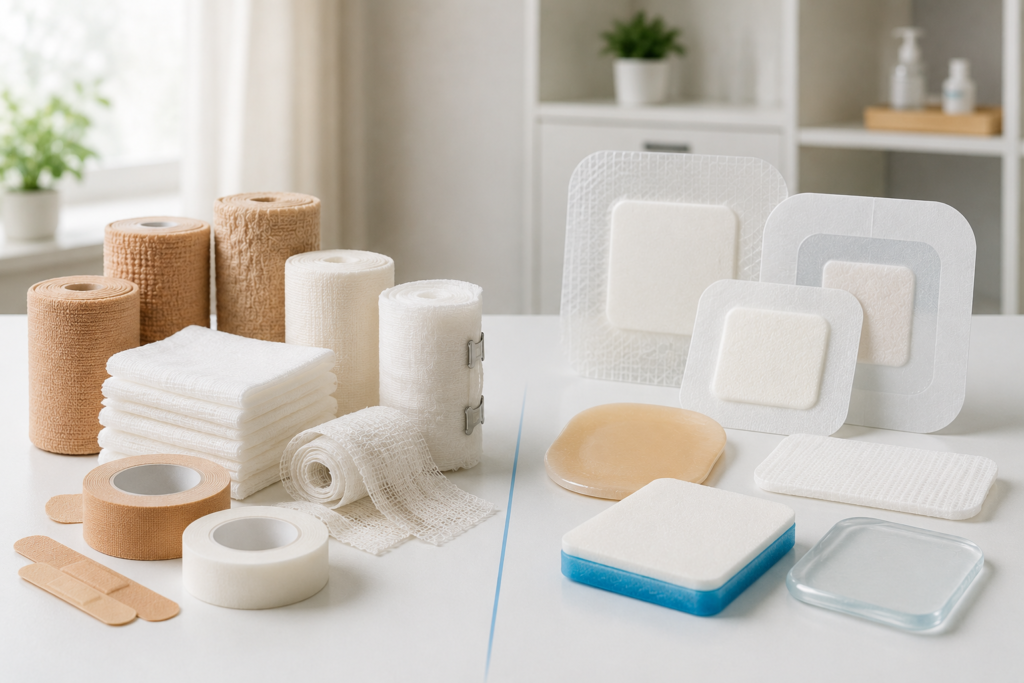
Wound care has come a long way over the last twenty years. Cotton dressings and basic bandages haven’t disappeared; they still get used plenty, but clinicians now have access to products built to manage moisture, cut down contamination risk, keep patients more comfortable, and often heal wounds faster. The tricky part is knowing when the basic option is genuinely fine, and when a more modern Wound Care Bandage is going to give a better outcome.
Key Takeaways
- Modern wound care is about creating the right conditions for healing, not just covering the wound up.
- Gauze still has its place, but it’s no longer the automatic best choice for every wound that comes through the door.
- Picking the right wound care bandages comes down to wound type, how much exudate there is, infection risk, and the patient in front of you.
- Advanced dressings can mean fewer dressing changes, more comfort, and often quicker healing.
- Facilities are better off with a varied wound care inventory than betting everything on one universal dressing.
Why Are Traditional Wound Care Bandages No Longer Enough for Every Wound?
Traditional dressings are still genuinely useful for a lot of minor injuries, but they were never built to handle the full range of wounds clinicians see today. Modern wound care is about protecting healthy tissue, managing moisture properly, and cutting down on dressing changes that aren’t necessary.
Standard gauze and adhesive bandages became the default for a simple reason: they were cheap, easy to get hold of, and everyone knew how to use them. They’re still worth having on hand, but the science around wound care has moved on quite a bit since then.
The World Health Organisation points out that good wound management plays a real part in cutting down healthcare-associated infections and improving outcomes. According to clinical guidance from Wounds International, maintaining an optimal moist wound environment remains a fundamental principle for managing a wide range of wound types.
From what we’ve seen working with healthcare procurement teams, one of the biggest wins comes simply from matching the dressing to the wound, rather than expecting one product to handle everything.
Modern wound management takes into account:
- Moisture balance
- Tissue protection
- Infection prevention
- Patient comfort
- Dressing wear time
- Cost across the whole healing period, not just what’s on the price tag
What Makes Modern Wound Care Different?
Modern wound care starts with assessing the wound, not with habit. Instead of just covering the injury up, clinicians pick dressings that actively support what that specific wound needs to heal.
The real shift here is understanding that wounds heal better when the environment around them is managed, not just covered.
Traditional Approach
Traditional dressings are mostly about:
- Covering the wound
- Soaking up blood
- Basic protection
- Frequent changes
Modern Approach
Today’s products are built to:
- Keep moisture at the right level
- Protect fragile new tissue
- Reduce trauma when the dressing comes off
- Handle different exudate levels
- Support longer wear times where that’s clinically appropriate
None of this makes older products obsolete. It just means clinicians have more appropriate options to reach for depending on the situation.
When Is a Gauze Dressing Wound Still the Right Choice?
A gauze dressing wound solution is still genuinely effective for a lot of straightforward injuries, as long as it’s used properly. Gauze is one of the most flexible products around for cleaning wounds, packing, cushioning, and use as a secondary dressing.
Even with everything that’s changed in wound care, gauze hasn’t gone anywhere.
It works well for:
- Minor cuts and abrasions
- Cleaning a wound initially
- Temporary coverage
- Surgical procedures
- Secondary absorbent layers
- Wound packing where that’s clinically indicated
That said, it has its limits too.
Standard gauze can:
- Dry onto healing tissue
- Need replacing more often
- Offer limited moisture control
- Cause discomfort on removal if it’s dried out
We see this a lot in busy workplace first aid rooms. Staff will reach for dry gauze on pretty much everything, regardless of what the wound is. Fine for a superficial scrape, but on bigger wounds, switching to something that maintains moisture usually means a more comfortable patient and fewer dressing changes.
How Do Modern Wound Dressing Bandage Solutions Improve Healing?
Modern wound dressing bandage products are built to work with the body’s own healing process, not against it. They manage moisture, protect the skin around the wound, and reduce how much the newly forming tissue gets disturbed.
Covering a wound doesn’t automatically make it heal faster. What matters is the quality of the environment underneath the dressing.
Depending on the wound, clinicians might choose something that:
- Absorbs heavy exudate
- Holds moisture for drier wounds
- Cuts down friction
- Adds cushioning
- Protects surgical sites
- Supports fragile skin
A lot of advanced dressings also stay in place longer, which means less repeated removal and less interruption to tissue that’s trying to regenerate.
Clinical literature and industry benchmarks around wound care generally agree that fewer unnecessary dressing changes means more comfort for the patient and better use of nursing time.
Why Do Adhesive Products Matter More Than Many People Realise?
Adhesive fixation doesn’t get much attention, but a poorly secured dressing will fail before the wound underneath it becomes the real problem. Decent fixation products keep the dressing where it should be and protect the skin around it.
The dressing itself gets all the focus. Fixation matters just as much.
More healthcare providers now buy adhesive tapes online because it’s easier to compare specs, stock a range of sizes, and keep supply consistent for different clinical needs.
Different tapes are built for:
- Fragile skin
- Long-term wear
- High-movement areas
- Surgical fixation
- Waterproof use
- Sensitive patients
Get the tape wrong, and you can end up with:
- Dressings shifting or coming off
- Skin irritation
- Having to replace the dressing sooner than planned
- More clinical time spent fixing avoidable problems
Should Healthcare Facilities Still Buy First Aid Bandage Supplies in Bulk?
Yes, but the decision should be about clinical suitability, not just volume. A well-balanced inventory means a facility can respond properly to whatever wound comes through the door.
Bulk purchasing still matters for inventory management.
Rather than stocking one standard product and calling it done, facilities should be thinking about:
- Adhesive bandages
- Sterile gauze
- Non-adherent dressings
- Foam dressings
- Medical tapes
- Conforming bandages
- Compression products
When organisations buy first aid bandage products with this in mind, they’re better prepared for everything from a minor workplace cut to more complicated wound management.
Choosing the Right Wound Care Products for Different Clinical Settings
Every healthcare setting deals with different wounds. Matching the product to the setting makes care more consistent and more efficient.
Here’s a practical rundown.
| Clinical Setting | Common Wounds | Recommended Product Focus |
| Medical clinics | Minor procedures, lacerations | Sterile dressings, adhesive tapes, gauze |
| Aged care | Skin tears, pressure injuries | Low-trauma dressings, foam dressings |
| Workplace first aid | Cuts, abrasions | Adhesive bandages, gauze, tapes |
| Community nursing | Chronic wounds | Moisture-managing dressings |
| Hospitals | Surgical wounds | Advanced wound dressing bandage solutions with appropriate fixation |
How Can Healthcare Buyers Choose Better Wound Care Products?
The best purchasing calls balance clinical performance, patient comfort and reliable supply. Looking past the unit price usually pays off in the long run.
Worth asking, before buying:
- Does this suit the wounds we treat most often?
- Will it cut down on unnecessary dressing changes?
- Can staff apply it correctly without extra training?
- Does it protect the surrounding skin?
- Is stock going to be there when we need it?
- Can we order consistently from one supplier we trust?
Building a proper wound care inventory means clinicians can respond confidently to whatever comes in, instead of trying to make one dressing do every job.
If your facility’s looking to strengthen its wound care supplies, there’s a full range of dressings, adhesive tapes, bandages, gauze products and clinical consumables in the wound care collection.
The Bottom Line
Modern wound care hasn’t replaced traditional bandages. It’s just added more tools to the kit. Gauze, adhesive tapes and standard bandages are still essential for plenty of situations, but the clinical evidence is pretty clear now: pick the dressing based on the wound, not out of habit. Better product selection means more comfortable patients, more effective healing, and clinical teams making better use of their time.
At Sumac Medical Supplies, we stock a full range of wound care solutions for clinics, hospitals, aged care providers, allied health professionals and workplace first aid teams. From dressing wound products to medical tapes, our range is built to help healthcare providers deliver care they can rely on.
Looking to upgrade your wound care supplies? Explore our complete range of wound care products today and find solutions trusted by healthcare professionals across Australia.
Frequently Asked Questions
1. Are modern wound care bandages better than traditional bandages?
Not always. Traditional bandages still do the job well for a lot of minor injuries. Modern dressings come into their own for wounds that need moisture management, extra protection, or longer wear time.
2. When should I use a gauze dressing wound product?
Typically for cleaning wounds, absorbing drainage, temporary coverage, surgical procedures, and as a secondary dressing where it’s clinically appropriate.
3. Is it better to buy adhesive tapes online for healthcare facilities?
Buying online generally makes it easier to compare options, manage inventory, and get access to a broader range of medical-grade tapes suited to different clinical needs.
4. How do I choose the right wound dressing bandage?
It comes down to wound size, moisture levels, infection risk, location, the condition of the surrounding skin, and how often the dressing is likely to need changing. Clinical assessment should always be what guides the choice.
5. What should organisations consider before they buy first aid bandage supplies?
Think about the kinds of injuries you’re likely to see, product quality, sterility, storage conditions, and keeping enough variety on hand to cover different wound types rather than relying on one bandage style.
6. Can advanced wound dressings reduce dressing changes?
Yes, a lot of them are designed to stay in place longer while keeping the healing environment appropriate, as long as they’re used according to clinical guidance and the wound is checked regularly.
