
Gloves
The Role of Nitrile Gloves in Reducing MDRO Spread in Australian Hospitals
Sep
Approximately 200,000 healthcare-associated infections occur in Australian facilities every year, resulting in approximately 7,000 deaths with the annual health care expenditure exceeding a billion dollars. They are the most widespread complication among hospital patients, and in too many cases, they are acquired by germs being an unwanted passenger on a hand or equipment. Multi-drug resistant organisms such as MRSA, VRE and CRE are especially worrisome since they are exceptionally hard to cure.
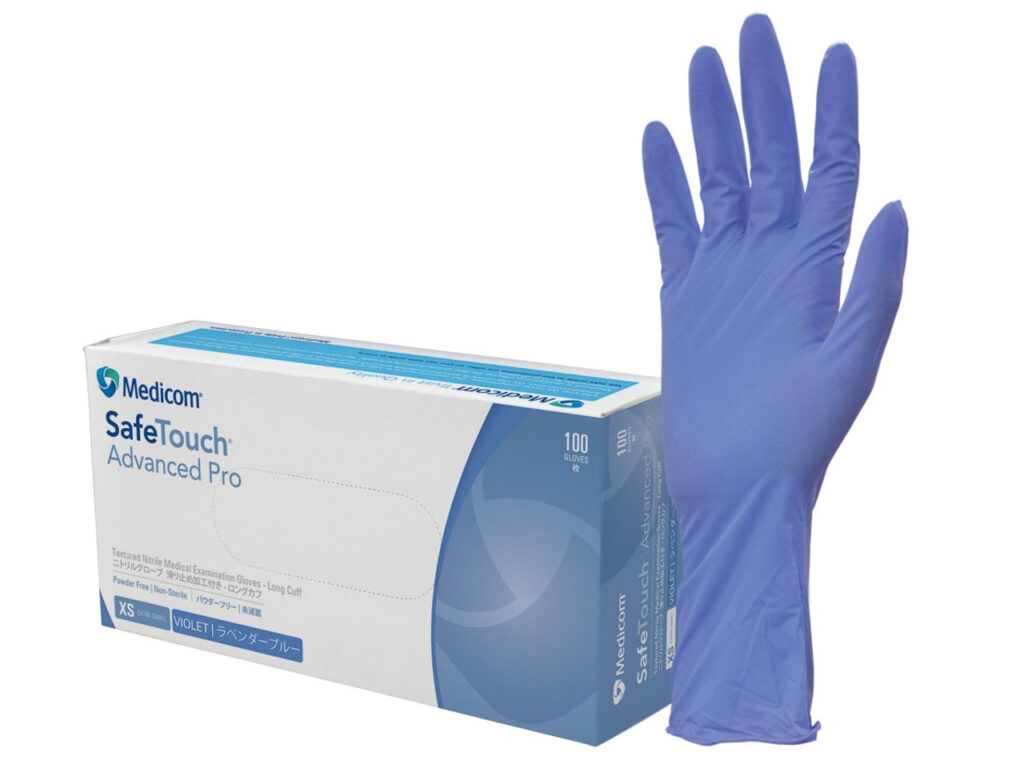
Medical nitrile gloves are your first line of defense, and they can break the chain of MDRO spread in case they are used properly. They’re simple, affordable, and remarkably effective.
The MDRO Challenge in Australian Hospitals
The transmission route of MRDO is surprisingly straightforward. Healthcare workers’ hands are the primary vehicle for spreading these organisms from patient to patient. Here’s what makes this challenge so critical:
- Direct contact with patients: Touch a dirty surface, and then touch a patient and you have several seconds to transfer harmful bacteria.
- Contamination of the environment: MDROs are able to stay on surface hours and even days long, posing a long term source of infection.
- At risk: Patients with weakened immune systems and elderly are the most vulnerable to severe complications.
- Complexity of treatment: In the case of infections, there are few effective antibiotics used and they prolong the recovery period and raise mortality rates.
Weeks to hospitalization and thousands of dollars to treatment can be added by the MDRO infection of individuals. The cost is immeasurable when you consider the emotional burden on the families and the burden on health care resources.
How Nitrile Gloves Help
This is where medical examination nitrile gloves become your strongest ally. Nitrile gloves provide better protection against pathogens than their latex and vinyl counterparts, and unlike them, they are totally latex-free, which removes allergic reactions in the staff and patients.
When appropriately put on, they provide a water-tight covering between your hands and any possible contamination. That is why they are the gold standard:
- Better puncture resistance: Nitrile can resist tears and punctures than vinyl and therefore supports the barrier integrity during strenuous work.
- Protection that is allergy free: No latex protections implies that there are no allergic reactions of health care workers or patients.
- Chemical resistance: Provides greater resistance to the disinfectants and cleaning agents that are frequently used in hospitals.
- Fits easily: Nitrile gloves are less prone to hand fatigue, especially on long shifts, and they fit the hand more closely than the old ones.
- Dependable supply: Hospitals are able to easily buy nitrile gloves online so that they can have continuous and uninterrupted supplies.
Best Practices for Maximum Protection
To maximize your benefits with your medical nitrile gloves there are some best practices that you must adhere to. Timing and technique make all the difference in preventing MDRO transmission.
When to use gloves:
- Immediately before any contact with MDRO-positive patients
- During contact precautions or isolation protocols
- When handling body fluids, blood, or contaminated equipment
- Before touching mucous membranes or non-intact skin
- During environmental cleaning in patient care areas
Proper technique essentials:
- Ensure gloves cover your wrists completely when donning
- Use the inside-out technique when removing to avoid contamination
- Always perform hand hygiene before putting gloves on and immediately after removal
- Change gloves between each patient interaction without exception
- Never touch your face, phone, or clean surfaces while wearing contaminated gloves
Medical Nitrile Gloves: Your First Line of Defense against MRDO
Medical nitrile gloves aren’t just another item on your supply list. They have become a very important weapon in your infection control repertoire, and can be incredibly effective in transmission of MDROs when properly applied. They collectively create a great defense against healthcare-associated infections, especially in combination with strong hand hygiene, correct donning and doffing practices and observing contact precautions.
The grander vision is promising. Although those 200,000 infections per year are indeed a major problem, it is also an opportunity. Whenever you wear medical examination nitrile gloves in the right way, it means that you are safeguarding your patients and your co-workers. You are decreasing the rates of transmission, eliminating complications, and ultimately saving people.
We can all work to reverse the tide of MDROs in Australian hospitals. It begins with as basic as a pair of nitrile gloves and the determination to wear them correctly, each and every time.
FAQs
Q: What are the guidelines for the use of gloves in a healthcare facility?
A: Medical nitrile gloves are to be put on prior to coming in contact with blood, body fluids, mucous membranes, non-intact skin, or contaminated equipment. The golden rule is: one job, one patient, one pair of gloves.
Q: What is the difference between nitrile and latex gloves in hospitals?
A: Medical examination nitrile gloves are not made of latex and they do not trigger allergic reactions in a good percentage of healthcare professionals and patients. Nitrile is superior in puncture resistance and chemical resistance to hospital disinfectants than latex. Both have great pathogen protection, but since nitrile has an allergy-free profile, it is the first choice.
Q: How do gloves prevent the spread of infection in hospitals?
A: Gloves provide a physical barrier, as a result of which direct contact between hands and the patient is avoided, which is the main path of the MDRO spread. When medical practitioners use medical nitrile gloves when attending to patients, pathogens will not have a chance to settle on the hands since the gloves will intercept them before they do so.
